
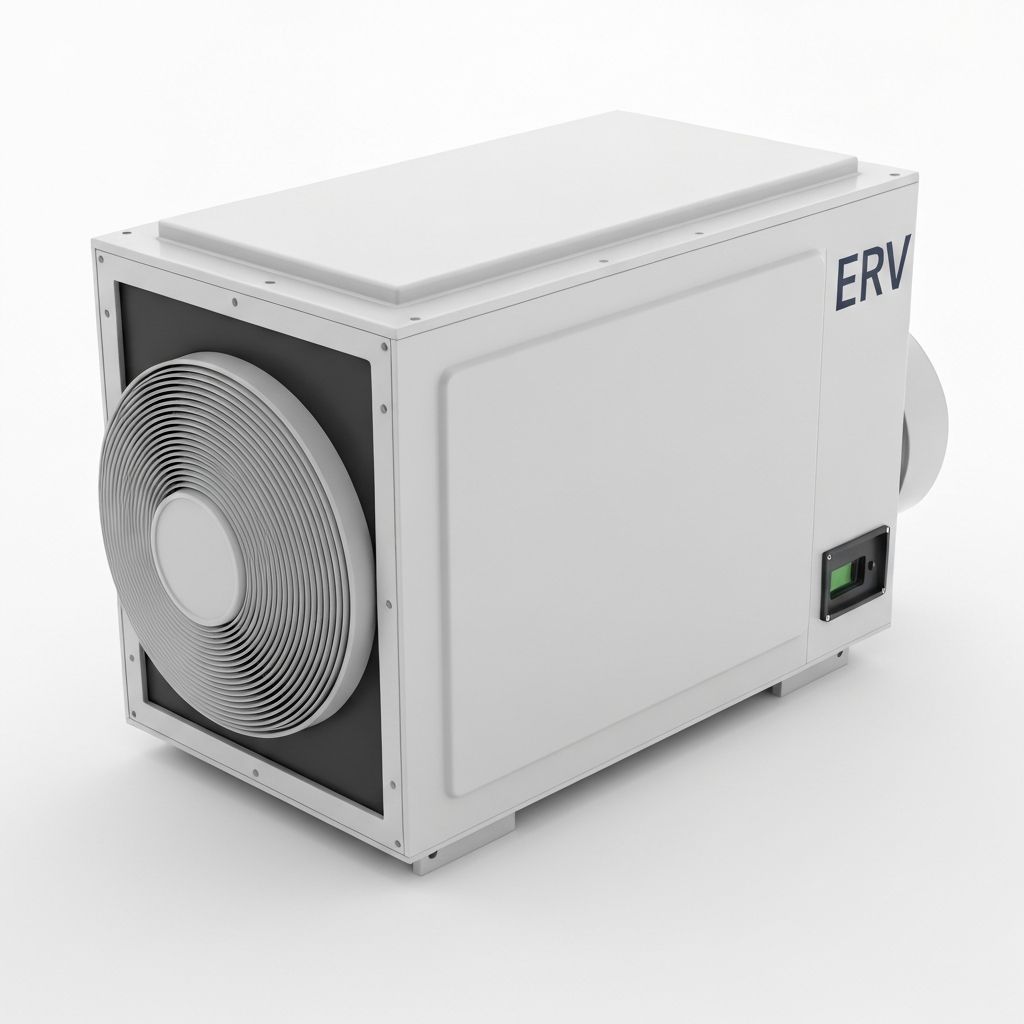
ERV and HRV both recover energy — but only ERV transfers moisture between air streams.
What is HRV?
Heat Recovery Ventilation (HRV) transfers heat between the incoming and outgoing air streams. When warm, stale air is exhausted from your home, an HRV captures that heat energy and uses it to pre-condition the fresh incoming air.
HRV systems are highly effective in cold climates where heating is the primary concern. During winter, they recover heat from exhaust air to warm cold incoming fresh air, reducing heating costs significantly. However, HRV systems do not manage moisture effectively, which is a critical limitation in humid climates.
What is ERV?
Energy Recovery Ventilation (ERV) takes heat recovery a step further by transferring both heat and moisture between air streams. This dual functionality makes ERV systems particularly well-suited to climates with high humidity, like Thailand.
The ERV core contains a special membrane that allows both heat and water vapor to pass through, pre-conditioning incoming air to match indoor conditions more closely. In hot weather, this means humid outdoor air is partially dehumidified before entering your space.
Why ERV is better in Thailand
Thailand’s tropical climate presents unique challenges that make ERV the clear choice over HRV for most applications:
Key benefits of ERV in tropical climates
- Reduces humidity load: By pre-dehumidifying incoming air, ERV systems reduce the workload on your air conditioning. This matters in Thailand where outdoor humidity often exceeds 80%.
- Improves comfort: Proper humidity control (ideally 50–60% indoors) improves comfort. ERV systems help maintain these levels even when continuously introducing fresh air.
- Supports air conditioning efficiency: AC works harder when it must remove moisture. By helping manage the incoming humidity load, ERV is designed to ease the demand on cooling.
- Helps reduce condensation: Introducing outdoor air without moisture control can cause condensation on cold surfaces. ERV helps limit this by managing the moisture content of incoming air.
Conclusion
For most homes and buildings in Thailand, ERV systems are the preferred solution due to the high humidity levels. While HRV systems may be adequate in some air-conditioned spaces where humidity is already controlled, ERV is generally the better fit in Thailand’s tropical climate because it also helps manage incoming humidity.
When selecting an ERV system, look for units with high latent (moisture) recovery efficiency, and consider adding PM2.5 filtration to address Thailand’s air quality concerns as well.
Watch
Related videos
Short explainers comparing recovery cores and how moisture transfer works can be featured here.
Video content pending
How an ERV core works
Video content pending
ERV vs HRV compared
Questions
Frequently asked questions
Common questions about choosing between ERV and HRV in a tropical climate.
