
Health note
PM2.5 particles are small enough to penetrate deep into the lungs and even enter the bloodstream. Long-term exposure is linked to respiratory diseases, cardiovascular problems, and reduced life expectancy.
What is PM2.5?
PM2.5 refers to particulate matter with a diameter of 2.5 micrometers or less — about 30 times smaller than a human hair. These fine particles are produced by vehicle emissions, industrial processes, construction, and agricultural burning.
Unlike larger dust particles that our nose and throat can filter out, PM2.5 particles are small enough to bypass the body’s natural defenses and penetrate deep into the lungs. From there, the smallest particles can enter the bloodstream and affect organs throughout the body.
Why indoor air is still affected
Many people assume that staying indoors protects them from outdoor pollution, but this is often not the case. Without proper filtration, a significant portion of outdoor PM2.5 finds its way inside, so simply being indoors is not the protection people assume.
Polluted air enters buildings through several pathways:
- Natural ventilation through windows and doors
- Air leaks around windows, doors, and through walls
- Mechanical ventilation systems without proper filtration
- Infiltration when doors are opened
Solutions for clean indoor air
Protecting your indoor environment from PM2.5 requires a comprehensive approach that addresses all pathways for pollution entry:
1. High-efficiency filtration
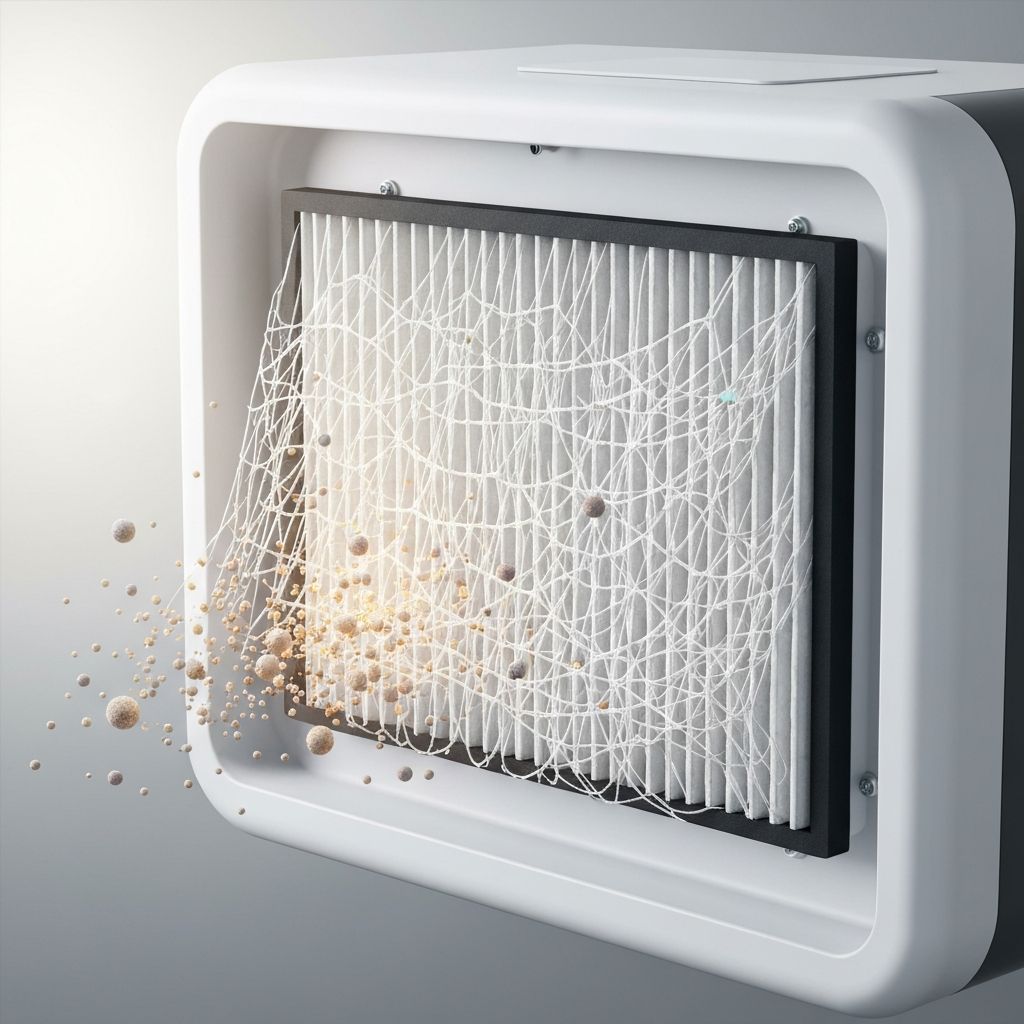
HEPA filters (H13 or H14 grade) capture the large majority of fine particles including PM2.5. These should be used on all fresh-air intakes and can be supplemented with standalone air purifiers for additional protection.
2. Balanced ventilation systems
A properly designed ventilation system with PM2.5 filtration lets you maintain fresh air circulation while filtering out pollutants. ERV systems with integrated HEPA filtration are ideal, as they also help manage humidity and recover energy.
3. Sealed building envelope
Reducing uncontrolled air leakage helps ensure that all incoming air passes through your filtration system. This includes sealing gaps around windows and doors and ensuring proper weatherstripping.
4. Positive pressure control
Maintaining slightly positive pressure inside the building helps prevent unfiltered air from infiltrating through gaps and leaks. This is achieved by supplying more filtered air than is exhausted.
Key takeaway
Clean indoor air requires both filtration and controlled ventilation. Simply closing windows is not enough — you need a system that provides fresh, filtered air while maintaining positive pressure to prevent unfiltered air from entering.
During high pollution periods, a well-designed ventilation system with HEPA filtration can substantially lower indoor PM2.5 levels, helping create a cleaner refuge from outdoor pollution.
Watch
Related videos
Explainers on PM2.5 and how filtration protects indoor air can be featured here.
Video content pending
Understanding PM2.5
Video content pending
Filtration on the fresh-air path
Questions
Frequently asked questions
Common questions about reducing PM2.5 indoors in Thailand.
